24TH TRIENNALE MILANO. DIRECTOR: Elizabeth Diller (dsrny)
Cinematographer.
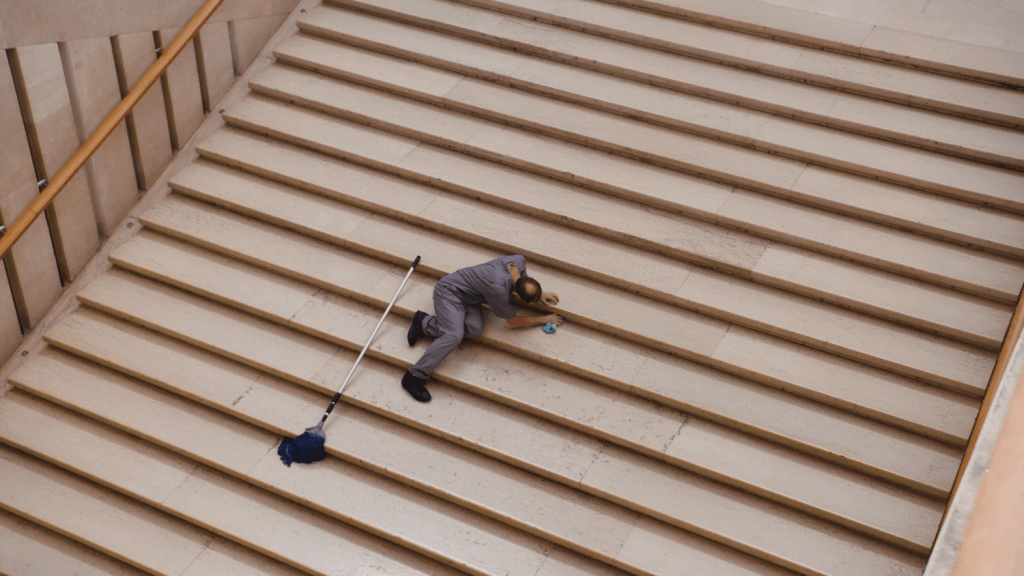
According to our hygiene-obsessed culture, dirt and germs are the common enemy. The ritual of daily cleaning accepts a futility: the moment a surface is cleaned, it starts to get dirty once again. Yet, we continue the Sisyphean task of fighting to eradicate bacteria day after day. Nowhere is the compulsion to fight germs more prevalent than in the contemporary museum, where conditioned and humidified air, pristine white walls, and spotless floors construct an antiseptic world hostile to germs. Despite all efforts, microorganisms track from body to body, space to space, and building to building. Grime from urban streets is brought inside; dead skin becomes airborne and settles as dust; bacteria spreads across high-touch surfaces like handrails and transaction counters.
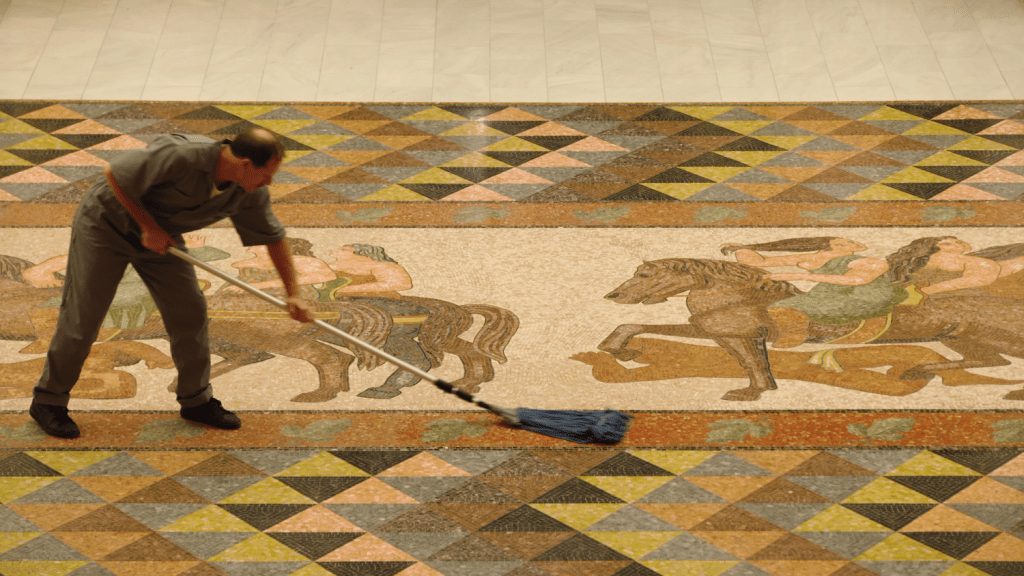
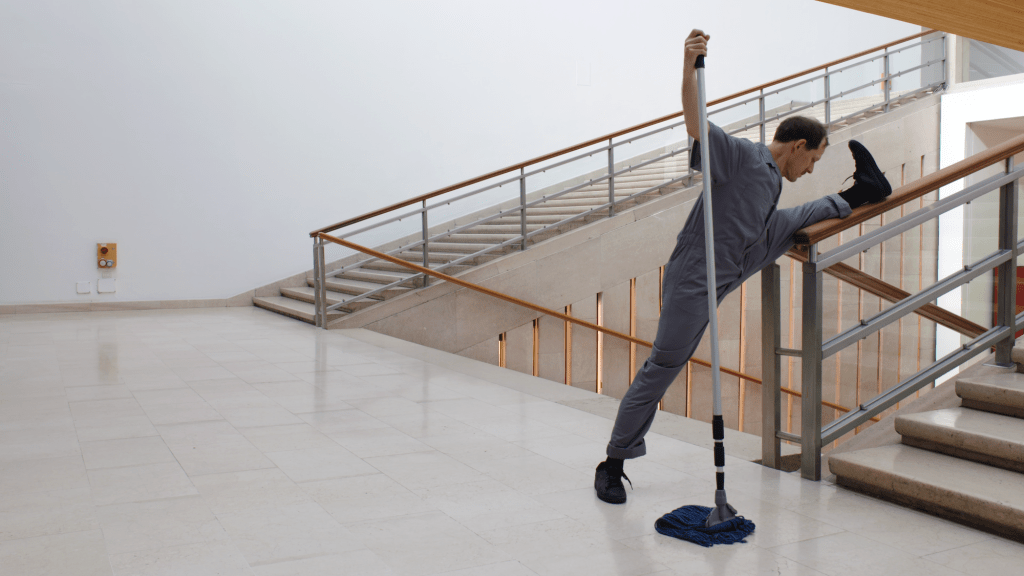
Modern architecture simplified the task of cleaning by eliminating the ornament-laden walls, ceilings, and floors of classical buildings, which provided microbes with intricate spaces to hide. Yet despite the pure, flat, and apparently controllable surfaces of modernism, one obstacle remained beyond our control over the microbial world: the 90- degree interior corner where planes intersect. A historical challenge to architects, particularly in the Renaissance, the Corner Problem poses more than the structural and aesthetic predicament of planes meeting at right angles; it challenges the illusion of our mastery over the environments we construct. As a pure geometric phenomenon, the corner recedes into an infinitesimally small junction, which is beyond the reach of brooms, mops, sponges, and other manmade cleaning devices. Within this micro-environment, bacteria and the smallest particles of dust settle, accumulate, and thrive.
Despite the futility of cleaning, museum protocols work to make dirt invisible as well as all traces of the human labor caught in the battle to resist its quiet aggression.


 ANTOINE PRÉVOST
Laisser un commentaire